
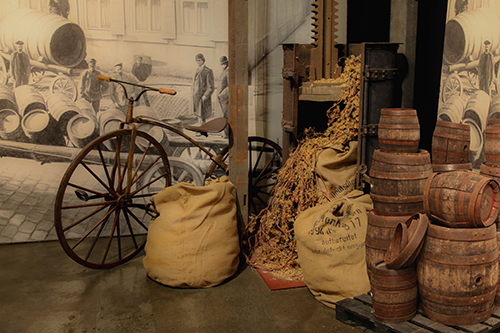
 The main ingredients found in beer are water, malted barley, hops, and yeast. There are other ingredients such as flavoring, sugar, and other ingredients that are commonly used. Starches are used as well, as they convert in the mashing process to easily fermentable sugars that will help to increase the alcohol content of beer while adding body and flavor.
Water
Seeing as how beer is mainly composed of water, the source of water and its characteristics have a very important effect on the character of the beer. A lot of beer styles were influenced by the characteristics of water in the region. Although the effect of minerals in brewing water is complex, hard water is more suited to dark styles, while soft ware is more suited to light styles.
Malt
Among malts, barley is the most widely used due to its high amylase content, and a digestive enzyme that facilitates the breakdown of starch into sugars. Depending on what can be cultivated locally, other malts and unmalted grains can be used, such as wheat, rice, oats, and rye.
Malt is obtained by soaking grain in water, allowing it to germinate, then drying the germinated grain in a kiln. By malting the grain, enzymes will eventually convert the starches in the grain into fermentable sugars.
Hops
Since the seventeenth century, hops have been commonly used as a bittering agent in beer. Hops help to contribute a bitterness that will balance the sweetness of the malts. They also contribute aromas which range from citrus to herbal.
Hops also provide an antibiotic effect that favors the activity of brewer’s yeast over the less desirable microorganisms. The bitterness in beer is normally measured on the International Bitterness Units scale.
Yeast
Yeast is a microorganism that’s responsible for fermentation. Specific strains of yeast are chosen depending on the type of beer produced, as the two main strains are ale yeast and lager yeast, with other variations available as well.
Yeast helps to metabolise the sugars that are extracted from the grains, and produces alcohol and carbon dioxide as a result. Before the functions of yeast were understood, all fermentations were done using wild or airborne yeasts.
Clarifying agent
A lot of brewers prefer to add one or more clarifying agents to beer that aren’t required to be published as ingredients. Examples include Isinglas finings, which are obtained from swim bladders of fish and Irish moss, which is a type of red alga.
Since these ingredients can be obtained from animals, those who are concerned with either the use or consumption of animal products should obtain detailed information from the brewer.
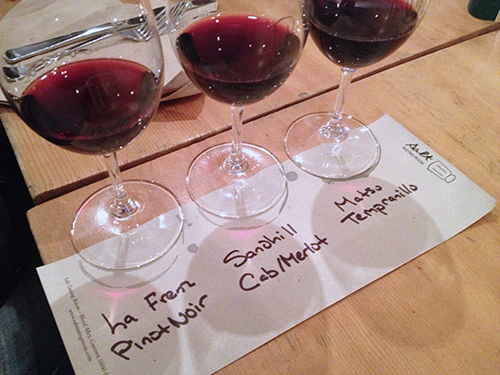
 Many small, boutique wineries are family-run businesses. Chances are quite good that you will meet one of the winery’s family members while visiting a winery. When visiting a wine tasting room consider yourself a guest. The owners and staff are proud of their facility and wines. They want everyone to enjoy their visit. Expectations in tasting rooms are different than at wine festivals or in busy bars. After visiting 125 wineries in the last nine months and talking with numerous wine hosts and visitors, we have created a selection of ideas to keep in mind when visiting a winery and vineyard.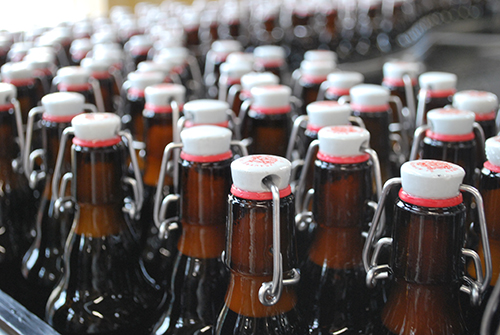
 The word “beer” is often used as a generic noun used to describe a cold refreshing beverage. For example, “Hiya Mike, let’s go for a beer.” However, beer lovers around the world will heartily agree that there’s nothing generic about beer.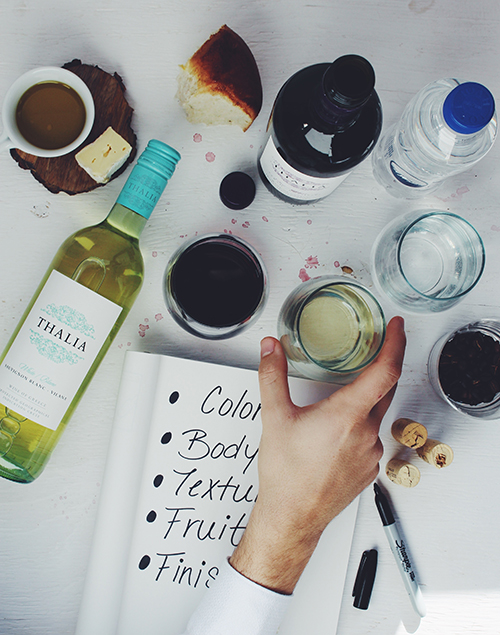
 Attending a wine tasting can be very entertaining, however there are a vast majority of wanna wine connoisseur’s out there who don’t like to attend these gatherings as they do not know what they are supposed to do or what way to act when sampling the wine. With wine tasting there is no great mystery, below are just a few things you should keep in mind.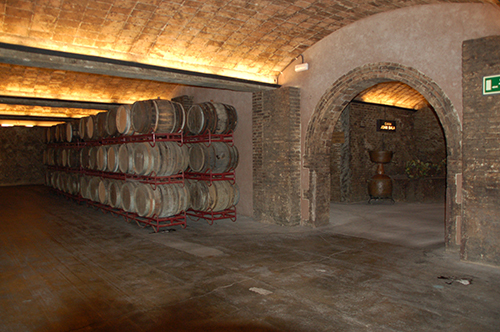
 “Good wine”, said Shakespeare “is a good familiar creature if it be well used”.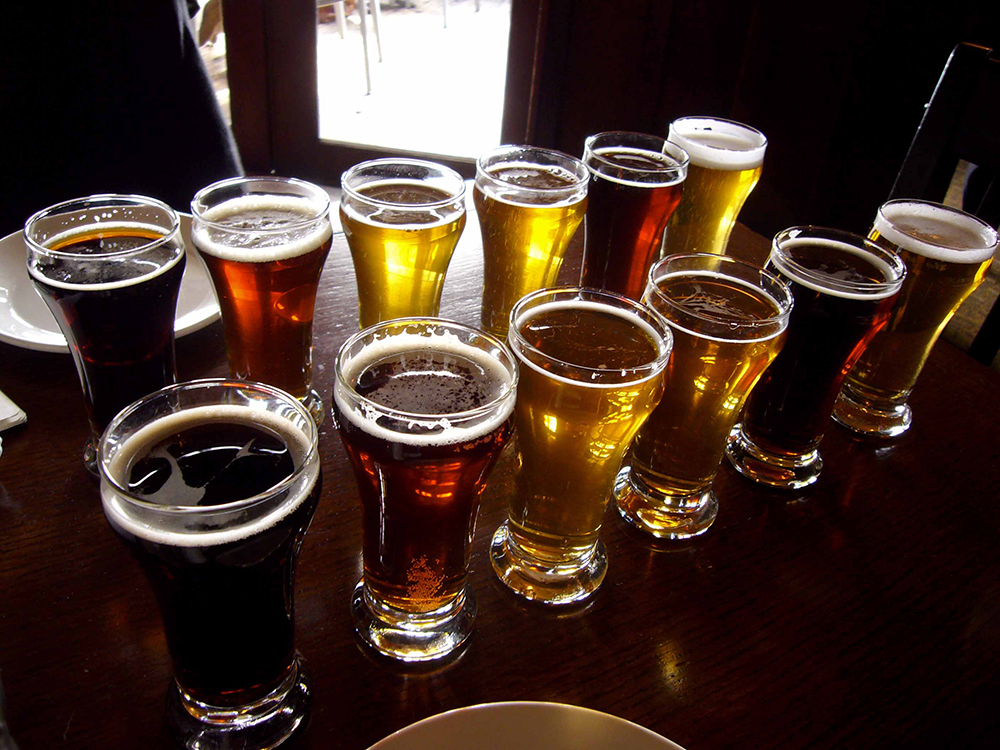
 Throughout Germany, beer is very popular with the culture. Germany contains well over 1,000 breweries, which is more than any other location in the world. All beer that is manufactured in Germany must follow the purity law, which lets manufacturers know what ingredients can and can’t be used. Basically, the only ingredients allowed to make beer in Germany are water, hops, and barley malt.
Recent Comments